
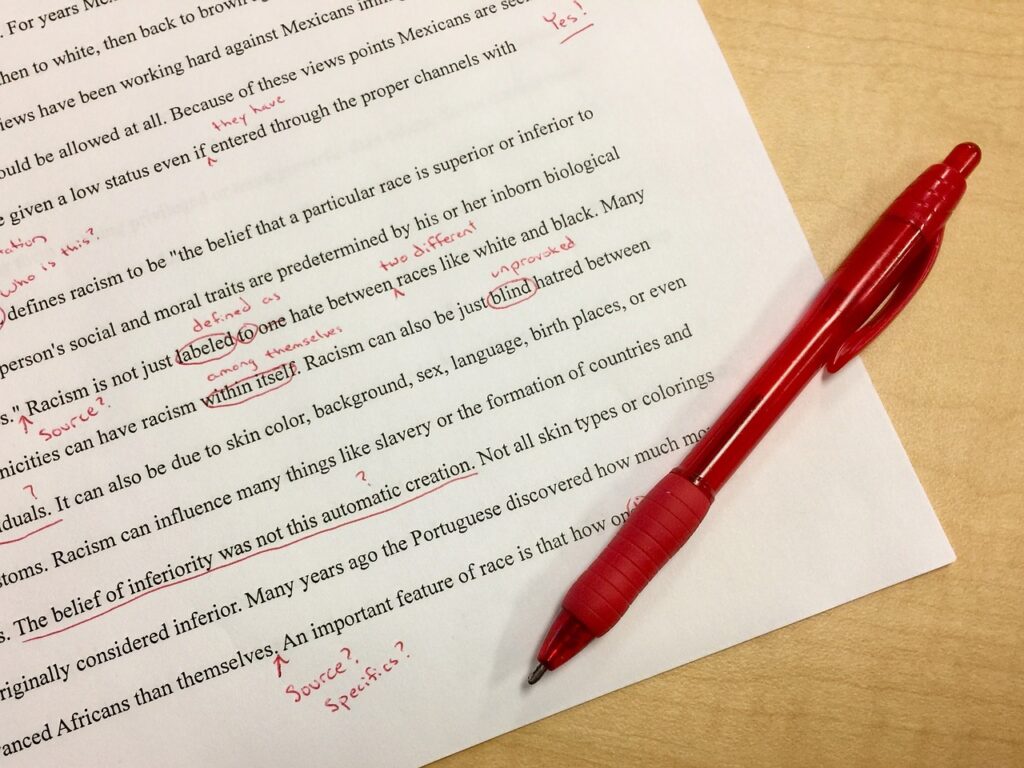
As part of my service, I often introduce my ghostwriting clients to various humans how edit because if they want their manuscript published, it needs to be edited, and I as ghostwriter can’t do it. One client at first declined my offer to introduce him to editors because “I’m undecided about going to an editor at this time. Thinking that I might use AI.”
I had already reached out to several I wanted to introduce. Instead, I had to tell them never mind. One of them responded, “We’re gonna be losing more to the AI option. For the authors’ sakes, I just wish it did a better job with editing.”
Then one week later, my client emailed to say he was ready to meet editors. I accommodated but also asked him what made him change his mind.
“I initially thought that AI could do it,” he said. “I realized that it’s a too complex and a too human task.”
Indeed. The reasons are the same as with ghostwriters: Humans understand nuance, subtlety, sarcasm, irony, restraint, the unreliable narrator, and emotion. Humans can understand more than just the what. They can see why a writer made a choice such as a fragmented sentence, when repetition creates an emotionally authentic moment, or who would benefit from an unconventional story structure. Humans recognize subtle tonal shifts, when a scene feels emotionally wrong, and when it would be better to make a character vulnerable. Humans can spot inconsistencies with story and character.
AI still can’t do any of these things, and until it becomes Skynet, there will always be a place for humans.
However, too many people don’t seem to realize that. They think they can cut corners and use AI instead of humans.
Here are seven other reasons why human editors are still better.
1. Humans protect an author’s unique voice. AI programs such as ChatGPT and Claude tend to make the stories sound the same, making it easier to spot AI’s robotic, formulaic, and generic language. When everyone sounds the same, there’s no distinct tone, voice, message, or originality. Everyone is average.
Famous authors such as James Joyce, William Faulkner, Mark Twain, and Jane Austen intentionally broke rules, and that’s one reason why they’re famous.
Sometimes, imperfections are stylistic choices.
2. Humans have been there, done that. Humans have memories, observations, and lived experiences. They’ve been in relationships, experienced losses and successes. They’ve won and they’ve failed. This allows human book editors in Atlanta to understand how real people in nonfiction manuscripts behave and react. They can spot dialogue that sounds really off and can explain why. They can verify if a moment is credible and believable or not.
In other words, humans have subject-matter expertise, and they can spot a fact from a hallucination. They also can spot bias, A 2022 study at USC found a 38.6% bias rate in AI-generated content.
AI has information but lacks understanding.
3. Humans understand an audience. Human book editors in Los Angeles keep the author’s audience in mind. How will that audience react? Will it become bored? Will it trust the narrative? If the author is trying to manipulate, will the audience accept it or not? Where will the audience become emotionally invested, and where is work needed to increase the dramatic tension so the audience continues to be invested?
4. Humans have ethics. Nonfiction works such as memoirs, biographies, and narratives often contain issues of privacy, fairness, truthfulness, trauma, and legalities. These gray areas require a human to help authors successfully navigate them and avoid negative consequences. AI doesn’t understand what it means if a closeted person is outed against their will, if a completely made-up court case is cited, or if a bot recommends suicide.
5. Humans engage in relationships. Like with ghostwriting, editing is an incredibly collaborative processes. There needs to be a large amount of trust between client and editor. The best editors learn their client’s fears, ambitions, insecurities, triumphs, so they learn how and when to give feedback. They understand when to push hard, when to encourage, and when to keep their mouths shut.
AI can’t mentor, advocate or collaborate like humans do. Some bots are getting better at it, but it’s still only an illusion. There is no better partner than a human.
6. Humans know when to leave it alone. AI tends to over-edit. Human editors know when something rough and unrefined is actually effective and should be kept in as is. They understand when something uncomfortable, strange, ironic, poetic, or unresolved should stay that way. AI would rather smooth out text than keep the author’s artistic vision.
7. Humans recognize originality. While there may be only seven basic story archetypes, human editors can recognize, possess, and identify taste, wisdom, intuition, and artistry that is found in manuscripts. Humans can evaluate art; as a result, they can recognize originality.
AI, on the other hand, can only predict likely language patterns based on the data it swallows up. It can’t explain why a story archetype lives on, why a particular manuscript fits so well into the archetype, and what original parts make it so effective.
To paraphrase a line from Chicago: “It’s all probability, kid.”
Having said all this, there is a place for AI. It can help catch grammar issues, spot repetition and redundancy, identify some continuity problems, make suggestions for changes, and do line editing much faster than a human.
But AI works best as an assistant to a human editor, not as a replacement. A human takes a manuscript and performs the magic that makes readers feel understood, unsettled, inspired, entertained, informed, transformed, angry, sad—whatever the author intends.
The bottom line is this: Human editors are superior because they are human.
I thought my client figured that out. Yet, one day later, after I had made introductions, he decided to try Grammarly.
I texted him, “Grammarly will do fine with basic editing (spelling, punctuation, style), but a human will be better for all the complex, emotional, subtle, nuanced writing we did.”
Sigh.
Feel free to read and check out my other posts related to ghostwriting. Go to https://leebarnathan.com/blog/
Let's Start A New Project Together
Contact me and we can explore how a ghostwriter or editor can benefit you.
